Nine Things I Learned in 25 Years, Running My Own Agency

Starting a business is not for the faint-hearted, yet 99.5% of all UK businesses are small to medium businesses started usually by one entrepreneur with their own cash. When you think about it, it’s incredible that risk-takers make up such a large part of the economy of the UK.

It’s also pretty sobering to look at the stats of success. Just over half of new businesses will fail within the first four years of business with only 3% reaching the fifth year. Gulp.

It’s a tough gig and one you need to weigh up first… or maybe just feel the fear and do it anyway!

Let’s be honest, if you were to focus on the stats too much you’d never start a business.

Be Smart was born twenty-five years ago, and in those years I’ve certainly seen highs and lows of running an agency. It’s exhilarating and scary but one thing’s for sure – I don’t know anyone in business who has it easy.

In the current climate, you could well argue that traditional 9-5 employment isn’t even a safe option – so why not do what you love instead?

So what have I learnt? Well, quite a lot. If you’re heading into the start-up phase of your business then take heed and read on to find out about my wins and losses. If you’re already in business then take comfort in knowing that you’re not alone.

Nine key areas from the past 25 years really stand out for me so here they are laid bare with a lesson for you to take away.


1.   Cash is king

I always remember when I started out with an enterprise loan from Walsall Training and Enterprise Council! At the time, the best piece of advice they gave me was “Cash is king!”.

Of course we all know how powerful and important cash is in life and personally, so it’s obviously going to be in business. ‘Cash flow’ is incredibly important in your business and for many it’s the reason they don’t last. In fact around 30% of small businesses are running at a loss and 82% fail simply due to lack of good cash flow. So even though they’re waiting for money to come in, they go under because they don’t get it quickly enough.

Having good credit lines allows you to give the best to your clients and take on more of them. Cash flow controls your entire business.

Smart Tip: Get good at understanding your cash flow or get someone in who can. It’s the blood and oxygen of your business. Make sure you state your terms on your invoices and follow up on late payments.


2.   Always under-promise and over-deliver.

I’ve always loved this mantra and we live by it. (You should too!) Over-promising and then letting your clients and those around you down is a road to failure. The last thing you want to do is lose trust and clients. What you need to do is wow them, impress them, and be supremely helpful for them.

Don’t set the expectations too low, but make sure you leave yourself something in the locker! Aim to set your client expectations at a level you can better so the client is constantly pleased and surprised.

Smart Tip: Deliver over and above your promises by setting the bar at an achievable level for your business and then delivering early, under budget, or over expectations.


3.   Be honest.

In business, honesty is integrity. Without it, you’ll lose trust and that can be catastrophic to your reputation. The best policy is to be honest and to be up front with your clients. Be honest about what you can do, be honest about how you’re doing, and if you screw it up – tell them!

It’s often said that you’re not judged by how well you do day-to-day but how you do when it goes wrong. Don’t cover it up, don’t hide from the issue – own up. We all make mistakes after all – it’s how we all learn!

Smart tip: Be honest and communicate clearly with your clients whether it’s good or bad. Integrity is important so strive for it every day.


4.   If something goes wrong be straight with the client.

And moving on from the above point, when it does go wrong, be straight! Tell them how it is and explain exactly what’s going on. Don’t treat them like a mushroom and keep them in the dark and then feed them more BS. We can all smell it a mile off!

When your client has all the facts and you’re being honest with them you can both work through it. If you’re adding smoke and mirrors to the situation then don’t be surprised when you don’t always fix the problems. You might also be surprised how effect this can be so be honest, own up, cut the crap and tell them like it is. Obviously do everything you can to fix any issues, too.

Smart tip: Drop the BS and be straight with your clients. People want honesty.


5.   Be prepared for inevitable team issues

If you’re going to run an agency then you’ll need good people around you. You’ll also grow good people and they will then start to look elsewhere if you don’t look after them. That’s not to say that you’ll keep them on forever though. You change, they change, and the business changes – that’s all part of the fun.

Be prepared for change in your team. I once had three of my team leave all at the same time! Two of them set up on their own. It happens, and you have to get past it. From these situations come great learnings and looking on the bright side, this can breathe new life with an influx of new talent to replace them. New people have new innovative ideas and enthusiasm, so see it as an opportunity.

Smart tip: People, business and life changes. Be prepared to change and adapt with it.


6.   Put contingencies in place

One of the key areas of a small business or agency is it can very often rely on the drive or work of one person. Without a contingency you’ll come unstuck. I was very fortunate that this didn’t happen to me in the year 2000.

I was diagnosed with a spinal cord tumour, which meant I was away from the business for a whole year. The business ran just fine whilst I was away although I was having regular management meetings with my team at home.

I was honest with clients and all of them were brilliant, offering advice, support and love  -which probably helped me get back to health and business faster.

As well as insurance you’ll need to know what would happen to the business if something bad happens. Planning means you won’t need to worry about it unless it happens.

Smart tip: Build a ‘what if’ plan. Don’t bury your head in the sand and say, “It won’t happen to me!”


7.   Take the time to form real relationships with clients

Look beyond the pitch, the work, the invoice, and see your clients as people and as true friends. Many of our clients have become great friends over the years and because of that we’ll go above and beyond for each other if the shit hits the fan (which is rare).

We all know the classic small business phrase, “people buy from people”, because it’s true. And some relationships last forever. Look at your clients as part of your team, your business, and your journey.

Smart tip: Your clients could be so much more than just clients if you let them. Find clients, make friends. Whoever said not to mix business with pleasure didn’t know how important it is to have fun!


8.   Dig deep to understand the client’s problem then solve it

When you’re running an agency it can be very tempting to create visually great offerings that simply don’t help the client at all. We’ve seen it all too often when an agency has failed a client with pretty pictures and fancy pitches that don’t have the right message.

There are many designers that create pretty pictures, but few who create design with substance! Look at your work from the audience’s point of view and understand what the challenge really is. Who are the customers and what do they need really?

Smart tip: Get yourself in their shoes and ask yourself what the real problem is… and then solve it in the best way you can!


9.   Be consistent in dealing with clients, suppliers and the team

“The way you do anything is the way you do everything!” Be consistent with the way you deal with the client, your suppliers, and your team. Help them all to understand and know what to expect.

Always do what you say you’ll do and if you can’t do it, let them know you can’t and why you can’t. Never let clients down on getting their initial design visuals or artwork ready for sign off.

Smart tip: Be consistent throughout your business from client to supplier to team members.


Bonus tip – do what you love!

It was Confucius that said “Choose a job you love and you’ll never have to work a day in your life”, so why not build an agency or a business around what you love? It all works so well when you do.

You’ll have so many challenges in business and running an agency is no different. Why not make it something so great that even in the darker days you’ll drive yourself through with the passion you have for it?

It’s been a fabulous experience over the past 25 years and I do hope you took something from me sharing my top tips with you.

If you’d like to discuss any of these ideas get in touch: philippa@besmartdesign.co.uk

How to Embed Values in Your Business

What do you believe in? Why did you start your business? Why do you work for your organisation? What mission are you on?

(Tip: it’s rarely about money!)

The values you have in your business are so important to you, your team, your brand but more importantly your customers. In his famous TED Talk ‘Start With Why’ Simon Sinek explained to a global audience why people buy from companies like Apple and why you should care.

It comes down to believing in the companies and brands you buy from. You only have to look at the recent PR disaster with Nike caused by them simply aligning their brand with a quarterback who did something many of their fans and followers disagreed with. When customers find out the business no longer aligns with their values, they don’t like it, they leave… and they get rather upset as shown with burning trainers and socks!

Your values need to be embedded in your business.

They need to be weaved through everything you do so that your marketing, branding, messages, social media, emails, letters, talks and EVERYTHING you do follows your core beliefs, and ultimately your company’s mission.


First of all, you need to work out what your values are. This takes a little time and effort but we can certainly help you with it. What we want to do here is help you make your values the centre of your business and brand so that you’ll attract more of the right customers by ensuring your messaging is on point, aligned and congruent throughout.

Values are a key part of your company’s DNA.


Differentiate your business

One of the main reasons you’ll buy from one company over another (apart from them having the product or service you need) are their values.

Take the Apple example from above. Many Apple users freely admit that their devices are not the best and that they really don’t warrant the ticket price alone. So why are they so immensely popular?

Simon Sinek explained it when he said:

“Every single organisation on the planet knows what they do, but very few know why they do what they do”.

Apple know why they do what they do and they translate that perfectly through their products, marketing and branding.

Apple believes in challenging the status quo and they believe in thinking differently. They challenge this with beautifully designed products that are so simple to use, you can’t help but enjoy using them.

The legions of Apple fans buy into that. Apple also play this out with their famous product launches, their adverts, and their branding.

Apple is Apple through and through. That ‘simplicity’ is in their stores, their branding, their staff clothing, their packaging, their adverts, and of course their products.

It’s like a stick of rock – no matter where you look – it’s written through the business.

Should inspire great behaviours


To continue the Apple example, the core values and beliefs of the company then play out to the way they behave in the market and in store, on the phones and live chat support. If you’ve ever communicated with Apple you’ll notice something – it’s always on-brand.

With the obvious few exceptions, when you interact with them, buy from them, or engage with them, Apple are thinking differently and keeping everything simple to use. Bringing endless music to your pocket, phone calls to your watch and making tablets a true competitor to the laptop is just what they do. What you’re really buying is the culture.

Apple stores are designed as beautifully as the devices and the branding. That’s what billions of people are buying, the products are the what, not the why. Apple got it right.

Align your team and future hires around specific actions in order to be to the company you want to be


When it comes to growing a business the company culture should be at the core of it. Why should people buy from it then changes to why should other people be a part of it? Looking at another large US giant, Google, we can see this culture playing out there too.

The huge HQ building in California stands on 2,000,000 sq feet of farm land in Mountain View. ‘Googleplex’ has its own campus, free push bikes to transport people around and has water pools, plazas, and open spaces.

Google hasn’t created a building – they’ve created a city. But they’ve also embedded their values into it.

Here are Google’s core values:

  • We want to work with great people.
  • Technology innovation is our lifeblood.
  • Be actively involved; you are Google.
  • Don’t take success for granted.
  • Do the right thing; don’t be evil.
  • Earn customer trust and user loyalty and respect every day.
  • Sustainable long-term growth and profitability are key to our success.

“Be actively involved; you are Google” is interesting, isn’t it? They include their employees in Google by making them Google. They then play this out on their service by ensuring that their users are a core part of the company too. This is hugely empowering and motivating for their employees.


Achieve the goals and vision you aim to reach


Your values are far greater than your brand and business – they’re your mission! They help you achieve your goals and realise your vision. When you know why, your team know why and your customers know too, you grow together.

Embedding your values into your everyday culture and ethos helps you to grow and achieve far greater success because everyone with you understands what it is they’re doing and why they’re doing it.

When your team and your customers can rely your values and your mission to others without you having to intervene, you know you’ve got it right.

It all starts with knowing why and then it moves into your brand, which for many is the cornerstone of everything they do. We often meet with companies who have little in the way of a mission statement or beliefs laid out, but when we build a brand for them and help them work out their mission (we all have one) it really starts to make sense and change things for them.

If you’re ready for that to happen to you, let’s talk. We know that’s why we do what we do as well as bringing integrity, openness, consistency, and fun to the world of branding.

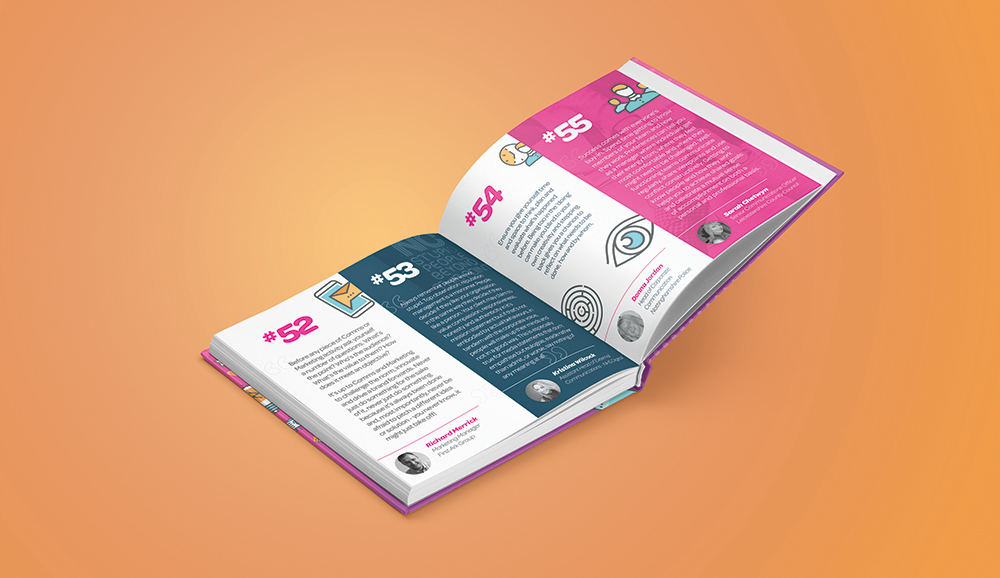
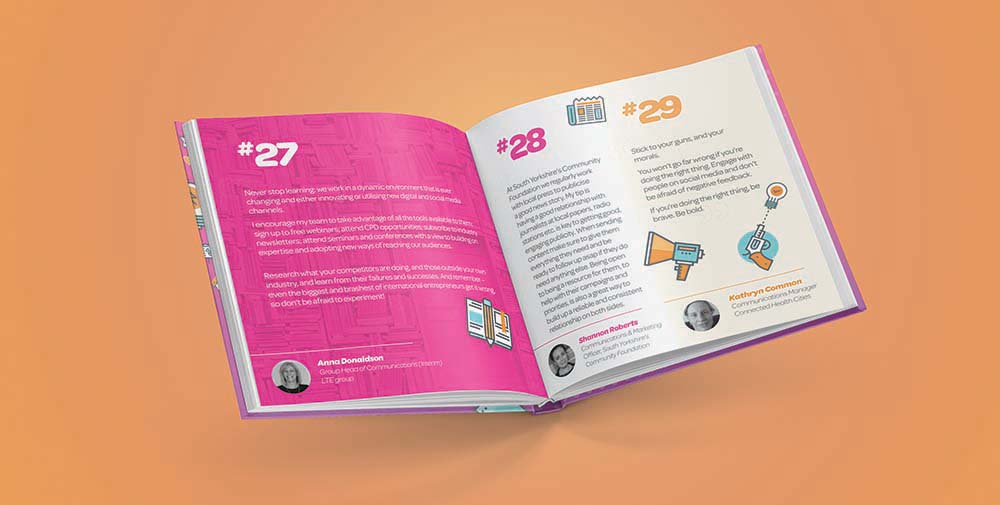
Announcing Comms Tips from the Experts…coming soon!


In July and August 2018, we contacted senior comms experts across both the public and private sectors in the UK asking them:

‘What’s your top success tip, pet hate and how you overcame it or advice you could share to fellow comms people?’

Quite a few eager people dived in feet first to share their pearls of wisdom.

We’ll be launching this in the form of an ebook very shortly and hope you’ll find it useful – perhaps when you’re in need of some ‘oomph’ you can dip in to it and get the inspiration you need. Or better still flick randomly through the pages until a page grabs your eye and take it that your meant to read it at that moment? Every penny we raise by selling this ebook will go to charity. Funds raised from the sale of this ebook, will be split evenly between PETA UK and Cancer Research.

We’d like to give a big thank you to all the contributors, without you this wouldn’t have been possible!

If you’d like a copy watch out for the launch coming soon…

Just how brave are you?

In the course of our working month, we deal with a lot of different clients in the briefing process.

The briefing process is a necessary stage for us, as your design agency, to understand what you’re trying to achieve so that we can craft the best solution to achieve the best result.

As part of that process we’ll ask you questions, not just the basic Who, What, Where, When but the deep searching questions that really get to the ‘big idea’. One of the questions we’ll ask is ‘How brave are you?’ Now you could be reading this thinking ‘what on earth has that got to with the price of chips?’ We ask that question because it’s very important to us (and to you hopefully!) to provide a creative solution that gets real results. The answers we receive are varied, depending on the person we’re dealing with and the culture of the organisation. Many clients like to be seen as brave and will want something that turns the status quo on its head but the reality is often quite different.

As a design agency it’s our responsibility to push creative boundaries and we’ll often come up with 3 or more creative concepts depending on the project that range from ‘safe’ to ‘more exciting’ and ‘wow!’.

When we present the concepts, the client who has briefed us will love the most off the wall option and their response is immediate. But once it goes round the exec team or the marketing team for ‘feedback’, nine times out of ten I can bet a tenner that the creative will be watered down and tamed.

Our observations are that probably only 1 in 10 clients are brave enough to go with the most off the wall concept.

And this is a real shame, because with a watered down concept comes watered down results and therefore the money spent has not been maximised.

So come on people, be brave, take the leap and get much better results for your project!

Are you feeling the pain of Word?

Are you feeling the pain of using Word to create your newsletters or editable documents?

We often get asked to design newsletter templates in Word… and we don’t recommend that as an option. Not unless you want to create chaos in your marketing/comms team!

The functionality of Word for the average user is a nightmare; it takes longer to sort out the formatting than populating it in the first place. We often recommend we design it using InDesign then build it in PowerPoint as it gives you much more control and less hassle when you come to populate it. Boom.

If you’re feeling the pain of Word, give us a call on 01902 797970 or email us. Let us work with you to create a good looking newsletter template or other editable documents in Powerpoint.

Why do you need brand guidelines?

Brand guidelines are a set of rules for the use of your logo and other brand elements to create a unified identity when connecting colours, your logo or your typography. Sometimes they can extend to include your brand style or in other words the look and feel of all your marketing materials. The guidelines define how the elements that make up your brand are used and in essence defines how your business communicates with your audience.

It’s an important document because it can be used by employees and external creative suppliers to ensure that your materials are always ‘on brand’.

So what’s the business case for having a set of brand guidelines?

1. Consistency

When you have a predetermined set of rules, you will get a consistent look and feel to all of your marketing so when your ideal client visits your website, sees your advert or receives your sales brochure, they perceive your company in a certain way and the guidelines help you control that perception.

Consistency is important because it makes your brand recognisable and therefore reliable.

2. New employees benefit

You may well know your brand’s identity inside out, but a new employee probably won’t. It’s also particularly useful for giving to design agencies or publishing houses so that they may create new marketing materials that are ‘on brand’.

Your brand guidelines are composed of rules on how to use your brand’s visual elements. These rules will include when to use a logo versus a wordmark, whether you have a stacked or a long version of your logo, the exclusion zone around your logo, where it appears consistently on the page and the hierarchy of colour and typography.

Brand guidelines are a valuable tool for your employees to keep your brand cohesive. In larger organisations departments other than marketing or comms produce materials too, for example HR or the leader of a large project, so it’s important they all have the brand guidelines and more importantly are familiar with them.

3. Recognisable

By keeping your brand consistent, it allows it to be more immediately recognisable within your industry and with your target audience. Building a recognisable brand can take time but your brand can quickly start to stand out by adhering to your brand guidelines.

4. Staying focused

When introducing new products or services, a brand can get stretched too thin. By implementing brand guidelines, you have the tools to quickly and effectively maintain consistency. Brand guidelines help you align your business’s interests with your intended audience.

5. Value

With a cohesive brand identity you increase the brand’s perceived value. Consistency allows your brand to appear more professional and reliable. By implementing brand guidelines, you make it easier to maintain the quality and integrity of your brand’s image. This is particularly useful in a more price driven market, as consistently communicating your brand in a cohesive way means people will see the value in choosing you rather than your cheaper competition.

What’s included in brand guidelines?

Colour palette

These are the colours that make up your brand. Normally you’ll have a primary colour palette that will include the colours of your logo and the secondary colour palette will include complementary colours that can be used on marketing materials. It’s not wise to use too many colour options or you’ll start to lose your identity. Brand guidelines should include RGB and CMYK colour codes, so your colours stay consistent between web and print formats.

Typography

Brand guidelines will include typefaces and families, font sizes, and the hierarchy of the fonts your brand uses. It could include the typeface you use for headlines and the typeface you use for body copy as well as the preferred system typeface for documents you produce internally.

Logo design

How your logo should be displayed in different formats is a very important part of your guidelines. This could include size restrictions, exclusion zones, which colours to use, and how your logo should be displayed on different backgrounds. It’s also wise to show what not to do with your logo in terms of stretching or distorting it.

Additional elements that may be included:

Imagery

Imagery could include the style of photographs, illustrations or icons your company uses on your website or other marketing materials.

Tone of voice

Tone of voice is the personality of your brand that is expressed through words. It governs what you say in writing and how you say it. As we know, when we communicate via text or email, things can be taken out of context so it’s important to establish your personality in words across all medium in order to maintain control of your target audience’s perception.

It’s pretty much impossible to keep your brand identity consistent without brand guidelines. If you feel you need to create new guidelines then it’s important to engage with a creative, reliable and expert strategic design team like Be Smart Design. Not only can we create them for you but we can work with you on the strategic stuff that are the foundations of your guidelines document.

Contact us and we’ll create your brand’s visual elements in order to build guidelines that help you main a cohesive, impactful and strong brand.

Free pitching – clients pay in the end

Free pitching has always been a blot on the landscape for design agencies and we more often than not decline to take part in the process. We will, however, always consider paid-for pitches in the right circumstances. I thought I’d take the time to put our view forward as to why speculative pitching or free pitching is wrong, and how clients end up paying in the end anyway.


Professionalism

Considerable time and effort is required to prepare serious design proposals for any project. Creative proposals prepared without payment for a competitive pitch involving several other design agencies can only be speedily prepared, scantily researched and superficial. They cannot be based on a genuine understanding of the client’s business and objectives. In short, the proposals will not achieve the standards of professionalism which we commit to.


What about intellectual property rights?

Design businesses automatically own all the rights in the work they produce. If creative work is supplied in a free pitch, the client has no rights to use that work until a contract is agreed.

Inexperienced and unprofessional clients have been known to ask to retain creative work supplied by all the agencies involved in free pitches. The clients then make that creative work available to the successful consultancy with the suggestion that some elements of each design are included in the final work.

This is highly illegal and alienates professional design businesses from that client damaging the prospects of the client acquiring truly effective design solutions.


Expertise

Design agencies are selling design talent and expertise. To give away creative work is therefore to give away all. This contrasts with other professions, such as advertising agencies, for whom the creative element of a project often accounts for only a small proportion of the total remuneration they can hope to gain by winning the pitch. They are sometimes understandably more willing to speculate with their creative work, although as we suggest above, the relevance and quality of that work might be open to question.


Clients pay in the end

Design consultancies are commercial organisations. They need to make a profit. If speculative pitching becomes widespread, clients would simply find the cost of speculative pitches being reclaimed through higher fees and charges throughout the industry.


Our suggested way of commissioning design

1. Draw up a list of three or four consultancies. Google is your best friend here! You can find details of consultancies in all sectors of design, in all regions, plus their specialisations and contact information.

2. Provide a brief indicating overall design objectives, budget and time scale for the project, including any special requirements or terms. In some cases clients will find they cannot establish a full brief until they have an opportunity to discuss a project in detail with a consultancy in whom they place confidence.

3. Interview each consultancy and ask them to submit:

a presentation of their relevant credentials

methodology statement to indicate how they would approach the project

a proposal of work stages and fees required for carrying out the project, together with the terms and conditions for an appointment.

4. If it’s considered important that the competing design agencies carry out some preparatory work for their credentials presentations, a fixed amount of money should be offered to each to cover their time and expenses.

5. Choose and appoint in writing one of the design consultants and notify the other unsuccessful consultants.

We believe that great work stems from teamwork and a firm commitment by both client and design consultant to achieve the best result. If you’d like more help choosing the right design agency for you then we have a free e-book to download.

Download a free copy of our ‘Top tips to choosing the right creative agency for you’ here.

What makes great design?

I’m often confronted by design that a business has had created and they ask my opinion. Quite often it leaves me with a sinking feeling, not that I’m decrying other designers’ work but I feel I must help educate design buyers to understand what makes great design.

Design is about creating harmony and balance among the elements and having them come together in a final product that is outstanding. It’s not simply a case of throwing some images and copy on an advert or brochure. It’s so much more than that.

The designer/client relationship is a partnership and often this is not the case. By taking the time to choose the right agency and getting to know how each other work, you get so much more out of the relationship. Being thorough with your briefing and the agency being thorough in their questioning and research, the magic happens.

I want to help design buyers really understand what makes great design. It’s not a guide to help you to design yourself but how to get the best results from hiring a design agency to create the project for you. After all that is what they do, day in day out, for a wide variety of clients. It’s a guide to help you assess the design concept that is presented to you.


1. Do the ground work

You wouldn’t build a house without creating the foundations first; if you did it would fall down! The same goes for any of your marketing – think it through. What do you stand for? How do you do it differently than anyone else? Who is your ideal client, what is your message and then finally what channels will you use?


2. Stand out

In today’s message-heavy world it’s an absolute must to stand out or you’re wasting your money. By that I mean standing out with a great offer or proposition. Be different. Don’t just create something that everyone else is doing because you won’t stand out.


3. Work out your hierarchy of message

Your logo isn’t the message, so don’t have it at the top of the marketing piece as the main feature. The main feature should be the message/benefit you want to convey – the point you want to put across.


4. Appropriate typography?

Keep to a maximum of three typefaces and choose the typefaces to suit the message and the audience. For example, where you’re creating a message for your tenants to move them from traditional contact points to digital, choose a typeface that is friendly and non-threatening.


5. Lines and shapes

Lines are effectively used in separating or creating a space between other elements or to provide a central focus. The direction, weight, and character of the line can convey different states of emotions and can evoke various reactions.

Use shapes to add interest to your elements. Angular shapes indicate masculinity while velvety and curvy shapes like circles indicate femininity. Square shapes, elements, or designed items communicate security, trustworthiness, and stability. On the other hand, circles are like eye candy: They are organic, complete and communicate wholeness.


6. Alignment

When elements are aligned, they create a visual connection with each other that communicates a story. Alignment helps to put elements together in a visible and readable arrangement.


7. Choose the right imagery

Put the cook in the kitchen, so if your ideal client is an elderly person, don’t use images of a young person. Even more to the point try and avoid stock imagery – invest in good quality bespoke photography – besides probably seeing your image elsewhere, you really can tell it’s stock imagery!


8. Sets you apart in the mind of the audience

There are many companies in your field doing what you do – unless you’ve invented a time machine. The key is, does your design set you apart? Does it position you as credible and align with your values?


9. Adaptable

Often at the outset of your project and the briefing stage, the agency should be asking you how this project will be used. Will it need to be used elsewhere and will it work on social media for example? We recently designed an annual report which included a set of infographics that were to be used on social media so it was important to ensure they were easy to dissect and supply as individual images.


10. Instantly understandable

There’s no point making it difficult for your customer to understand what you are trying to say – make it easy for them. If they have to think too hard about it they will quickly move on.


11. Simple

‘Less is more’ and the most effective design pieces are those that are simple and uncomplicated. For example if you need a roller banner for an exhibition don’t try and put enough text for a brochure on it because people won’t read it. The roller banner is designed to give a snapshot of your business because it’s viewed from a distance.


Space is powerful when you want to deliver a direct message without the clutter of other design elements.


12. Contrast

You want your message to be conveyed to as many people as possible. Think about contrast of colours. Don’t for example allow yellow type on a red background as it will ‘jump’ and many people won’t even be able to read it, particularly those with visual impairment or the over 50s. Think about the contrast of certain colours and make your design piece as accessible to as many people as possible.

Contrast is also used to make elements stand out and grab attention. It creates a focal point in a design, creates visual excitement and increases the interest of any design creation. It can, for example, redirect the attention of a reader to a more important part or message of a presentation.


13. Colour

Colour affects the mood of the design. It represents different emotions and different personalities. The use of the colour red can incite anger, love, and passion or strong will. On the other hand, the colour blue, creates a sense of peace, serenity, and security.

Colour puts emphasis on the pertinent information that is conveyed by the other visual elements. It’s well worth checking out the psychology of colour that can easily be searched for on the internet.


14. Walk in their shoes

Imagine viewing the design concept from your ideal client’s point of view; look at it standing in their shoes – does it grab your attention? Does it provoke an action in you in some way?


15. Achieving the brief

Refer back to your agreed brief with the agency – does it work? Does it convey want you want it to convey?


Beware:

  • Don’t use Comic Sans or Brushscript – it’s so last century
  • Don’t use drop shadows – it’s so last century
  • Do I even need to mention clip art?

Does your design agency charge you author’s corrections?

Does your design agency charge you author’s corrections AKA author’s amends, client revisions or just client changes? What are your thoughts on it?


It can be a difficult conversation to have with clients but we’re as clear as possible at the start that the price we quote is subject to author’s corrections. We do this because we aren’t mind readers (how lovely that would be!) and can only quote on the information we have at the time.

In case you’re not sure what author’s corrections are, they are additional client changes that add extra time to a previously quoted project that we need to charge extra for at an hourly rate.

Having said that, we make allowances for small amends like image swaps and word changes but when it comes to project brief changes, pages being added or new copy having to be flowed in, that’s when we sweetly draw a line in the sand and shout up. We’ll always be as fair as possible, utilising any unused time first.

That’s why it’s difficult when we are asked to quote for ‘3 rounds of amends’. It’s like asking ‘how long’s a piece of string?’ Unless we have the amends at the time of quoting (unlikely) it’s nigh on impossible to correctly quote for 3 rounds of amends without either quoting too much so we lose the project or underquoting it and we’re out of pocket.

The answer? Give your design agency are very clear brief and approve your copy internally before giving it to us – that way you will save yourself money. We totally accept that once you see your copy in-situ, changes will be made but they’re not the massive budget-busting kind of changes that create tensions in relationships and end up in tears.

The relationship with your design agency is a two-way street and by working with them to understand their charging structure it will make for a much smoother and happier process all round.

I’d love to know what your experiences are, please let me know hello@besmartdesign.co.uk

The value and power of good design

How do we quantify the value of good design?

I felt compelled to write this article having seen some instances, due to reduced budgets, where there has been what I would describe as poor design. When I say poor, I don’t just mean the way it looks but the lack of design thinking or thinking about it from the audiences’ shoes. 

Some campaigns don’t land the message in the right way because it’s viewed from the organisation’s point of view and not the audiences. Comms teams need to talk to their audience and ask: What are their issues, what do they want to see, why don’t they engage, what are the barriers to them engaging, what channels do they engage with currently? Every design project should start from this standpoint.

As the Managing Director of a design agency it’s very easy for me to say that design can create great results for organisations, but that’s not enough – how do we quantify it?

We should really be asking ‘does good design create an increase in sales, engage teams, create a reaction in your audience or raise your company’s profile?’

If you think about innovative companies like Apple or Dyson, it’s quite obvious that design is at the very core of their business. It’s not accidental or a last-minute thing, its central to the strategy in all areas of those businesses. And this design thinking approach should be used more extensively in the public sector as well; it would benefit them massively.

Graphic design is art and commercialism combined where we understand there is a problem or challenge and look at it from the viewpoint of our clients’ audiences. We are paid to solve that problem.

Design can give businesses a competitive advantage and add real value to their business. In the public sector it can create real change. Organisations that invest in high quality design from respected designers perform better and are more able to secure investment, increase their market share and create change.

In a Design Council report from 2012 called Design delivers for business the following benefits were identified:

  • Design increases turnover: For every £1 invested in design, businesses can expect over £20 in increased revenues
  • Design is linked to profit: For every £1 invested in design, businesses can expect over £4 increase in net operating profit
  • Design boosts exports: For every £1 invested in design, businesses can expect a return of over £5 in increased exports

And the businesses areas strengthened through design were:

  • Stronger and more compelling brands that stand out in the market
  • Accelerating new ideas to market
  • Creation of new products and services that have transformed existing markets or opened up new ones
  • Establishing improved or new processes for product and service development to more effectively support innovation activity

How can design help organisations in the public and private sector?

  • Design is a differentiator. Good design can be a source of competitive advantage, through brand equity, customer loyalty, price premium or customer orientation.
  • Design is a motivator. Staff can be motivated by brilliant design, and this will often be reflected in their performance. A strong brand has the power to influence a workforce.
  • Design is good business. It can lead to new business opportunities, increased sales, better margins, higher brand value, greater market share, and a better return on investment.
  • Design can create cultural change in teams and audiences and can help public sector organisations reframe their challenges.

Many of the most successful organisations think of design as an investment and not a cost. Saving on design costs might be the most expensive decision you make, and in Ralph Speth’s words (CEO of Jaguar Landrover):

“If you think good design is expensive, you should should see the cost of poor design.”

Good design isn’t good enough for us, brilliant design is what Be Smart Design focus on; give us a call on 01902 797970 to find out how we can help you with your challenge.