A proper brand makes your marketing easier

Marketing can sometimes feel like shouting into the void. You’re putting out emails, social posts, and ads faster than a TikTok trend fades, but is anyone actually paying attention? If you’ve ever found yourself asking, “Why isn’t this landing?”, the answer might not be your marketing. It might be your branding. 

A well-defined brand strategy is the cheat code you should be using to create your marketing. When your messaging, visuals, and customer proposition are aligned, every piece of content feels like it’s working with you, not against you. Marketing becomes less like guesswork and more like a finely tuned orchestra. 

How branding simplifies marketing 

You might think that brandings only purpose is to look good and help people recognise your brand. And whilst it should do those things, it’s also about making everything easier. Here’s how it can do that: 

Consistent messaging with a defined tone of voice 

Your brand’s tone of voice is like its personality. Are you quirky and fun? Calm and reassuring? Straight to the point and serious? Once you’ve decided how you want to sound, writing copy across all platforms becomes infinitely smoother. No more second-guessing how to write your Instagram captions or subject lines, they’ll practically write themselves (okay, almost). 

Clear visuals = Instant recognition 

Ever seen a post and just known it was from a certain brand before even spotting the logo? That’s the power of consistent visuals. Using the same colours, fonts, and image styles helps build familiarity. When your visual identity is tight, every post or ad becomes another breadcrumb leading customers back to your business. 

Knowing your ideal customer means sharper marketing 

A strong brand strategy defines your target audience in detail. Not just demographics, but motivations, problems, desires, and quirks. This makes creating messaging that speaks directly to them so much easier. You’re not just taking random shots in the dark, you know exactly who you’re addressing and how to appeal to them.  

Common branding mistakes that complicate marketing 

Notebooks and pencils at the ready, we’re going to give you a quick crash course on what not to do! 

Inconsistent use of visual elements 

Changing your logo’s colour every week or using 12 different fonts might feel “creative,” but it confuses your audience. If your visuals look different every time someone sees them, they’ll never connect the dots. 

Generic messaging 

“We offer high-quality service and customer satisfaction.” Yawn. That could be anyone. If your messaging is vague or filled with buzzwords, your marketing won’t resonate. People don’t connect with fluff, they connect with real, specific, relatable ideas. 

No internal brand buy-in 

If your team doesn’t understand your brand, how can they communicate it? Misalignment internally often leads to conflicting messages externally. Your brand strategy needs to be known, shared, and lived by everyone from your marketing manager to your customer service team. 

Real life examples of good branding  

Take a look at brands like Innocent Drinks, Airbnb, or Gymshark. Their visual style, tone of voice, and values are locked in. As a result, their marketing feels natural, cohesive, and memorable. Not only does this save time on campaign creation, but it also leads to better engagement, stronger loyalty, and — yep — higher ROI. 

In fact, studies consistently show that brands with strong, consistent identities outperform those without. Customers recognise them faster, trust them more, and are likelier to buy. 

Proper branding pays off, quite literally. 

How to apply branding to your marketing channels 

Got your brand sorted? Great. Now let’s put it to work. 

Social media 

Use your tone of voice and visual identity religiously. Every post, story, reel, and ad should look and sound like you.  

Bonus tip: branded templates make life easier and posts more consistent! 

Email marketing 

Your brand voice should be as recognisable in your emails as your logo. From subject lines to signoffs, keep it you. Branded headers and footers also keep everything professional and familiar.  

PR and advertising 

Your values should shine through every press release, partnership, and ad campaign. If your brand stands for sustainability, make sure that comes through loud and clear, not just in your About page, but in your actions and promotions. 

Where Be Smart comes in 

Branding isn’t just picking some fonts and writing a snappy tagline (though we do love a good tagline). It’s about building a foundation that supports everything your business does, and that’s where Be Smart comes in! 

We help you work out your brand’s purpose, position, tone of voice, and visual identity. Whether you’re starting from scratch or need a full refresh, we make sure your brand becomes a marketing asset, not a burden. Want social posts that practically write themselves? Ads that connect in seconds? Campaigns that feel cohesive across every channel? That starts with branding done right. 

And because we’re not just creative, but strategic, everything we build is designed to make your marketing simpler, smarter, and way more effective.  

Come have a chat with us and let’s see if we’d be a good fit to work together! 

Why a rebrand can reinvent you (and why you might need to!)

When people hear the word “rebrand”, they normally think of a fresh logo and perhaps a name change. But a proper rebrand goes far beyond a fresh coat of paint. Done well, it can be just what your business needs to launch into its next chapter. Done poorly? Well… it can be an expensive disaster.

Rebranding is about evolution. It’s about reflecting who you really are now, not who you were when you first launched with a scrappy team, a Canva logo, and big dreams. As your business grows, so should your brand. So, how do you know when it’s time to hit refresh? 

What are the signs it’s time to rebrand? 

Your brand might need a glow-up if any of these sound familiar: 

Your brand no longer represents who you are today 

When you first started, you might’ve been targeting small local clients, but now you’re pitching to multinationals. Or maybe your services have matured, but your brand still screams “startup phase one.” If your current branding feels like your old Myspace profile, it’s probably time. 

You’re struggling to stand out 

It’s just a fact that most markets are saturated. If your branding blends in with the competition (or worse, looks like a knockoff), you’re not just failing to differentiate, you’re actively losing opportunities. A rebrand can help define your unique space in the market. 

You’re expanding 

New markets. New products. New customer segments. That’s great news but your old branding might not stretch that far. What worked for a niche B2B product in the UK might not resonate with a Gen Z consumer in the US. 

You’re held back by a dated image or bad PR 

Sometimes, it’s not what you’re saying, it’s what people think about you. If your brand has inherited a bit of baggage (think old scandals or simply a vibe that’s stuck in 2009), a rebrand can be the reset button you need. 

How rebranding reinvents your business 

When done thoughtfully, a rebrand is like therapy for your business as it helps you figure out who you really are and how to present your best self to the world. 

Clear market positioning 

A good rebrand defines your niche and sharpens your messaging so you’re not just another fish in the sea. You’re the flying fish with custom branding, and everyone notices. 

Stronger internal alignment 

Rebranding isn’t just external, it gives your team a reason to rally behind a clear mission, vision, and set of values. No more mixed messages or brand decks gathering dust. 

Attracting the right people 

Great branding speaks to your ideal customers and your future employees. Whether you’re hiring top-tier talent or converting leads, a compelling brand identity makes the right people say: “These are my kind of folks.” 

Consistency is (finally) achieved 

Remember that old blog header? The wonky social icons? The business cards you still haven’t updated? A rebrand gives you the chance to clean house and roll out consistency across every touchpoint. 

Avoiding rebrand disasters 

Of course, rebranding isn’t without its risks. Change can be scary (and expensive) if you don’t approach it strategically. 

How to avoid becoming a cautionary tale? 

  • Do your research. Understand your market, your competitors, and most importantly, your audience. 
  • Engage your customers. Surveys, focus groups, teasers, get people involved before the big reveal. 
  • Test before launch. Pilot the new branding in a controlled setting before you go global. 

Case study: Good vs. Bad rebrands 

The Good: Kellogg’s
Kellogg’s managed to modernise without abandoning its heritage. Subtle changes, refined fonts, and evolved packaging kept it fresh without alienating generations of cereal lovers. 

The Bad: Leeds United
They unveiled a new crest, inspired by… well, no one really knows. The public backlash was instant and loud. They scrapped it and (wisely) went back to the drawing board. 

Can BeSmart help with your rebrand? 

At BeSmart, rebranding is kind of our thing. We don’t just tweak logos, we put on our (metaphorical) white coats and examine your brand’s DNA to uncover what really sets you apart. Whether you need a total transformation or just a strategic refresh, we’ll help you shape a brand that actually feels like you, only better. 


If your business has outgrown its current identity or if you just have a sneaking suspicion that your brand could be working harder for you, let’s talk! 

How effective branding can clarify your message and amplify your reach


You might think that branding just boils down to a cool logo and a catchy slogan. And whilst they’re a good thing to have, there’s quite a bit more to effective branding than just that!  

It’s really about showing the world who you are, what you believe in, and why you’re important. When done well, branding doesn’t just make your message clearer, it also helps you reach more people, making it easier for them to connect with what you’re offering. 

What’s branding all about then? 

What is branding? 

At its core, branding is about defining your brand’s identity. It’s everything people see, feel, and hear when they think about your company, as well as what they should expect from you. 

Why does branding even matter? 

A strong brand shapes everything. It’s how you connect with your audience and how they connect with you. It helps people recognise you, trust you, and feel involved in what you’re all about. Think about it, we buy from brands we feel connected to. Would you buy from a brand who’s branding is all over the place and who you felt you couldn’t know and trust because of that? Probably not! This is why good branding really matters. 

How branding helps clarify your message 

What does your brand say about you? 

Branding is the best way to clearly define who you are and what you stand for. It’s your business’s personality, its values, and its promise to your customers. When your branding is crystal clear, it’s much easier to communicate your message because it reflects your mission, your vision, and your values all in one go. 

Is all that sounding a bit confusing? Don’t worry, we’re going to give you an example to help! So, picture a company that’s all about sustainability. They’re going to make sure their branding reflects that. Their logo, colour scheme, and messaging will convey a commitment to eco-friendly practices, which speaks to the kind of audience that cares about the environment. The clearer your brand is about what it stands for, the easier it is for your customers to understand what you’re about. 

Take a page from the big players 

Think about Apple – they’ve nailed their branding so perfectly that we’re 99.9% sure that just saying their brand name has you already picturing their brand clearly. Their branding is a textbook example of clarity. The clean, minimal design of their logo, the smooth, simple lines of their products, and even the tone of their advertising all tie into one message: innovation, quality, and simplicity. Apple’s branding is so clear that anyone who sees their products knows exactly what they’re about, without them really needing to say much at all. 

How do you create a strong brand? 

How to develop a brand that sticks 

Building a strong brand starts with getting clear on a few important bits and pieces. We recommend grabbing a mug of your favourite hot drink (and a biscuit or two!) and brainstorming these questions: 

  • Who are you? What’s your purpose? What do you want people to feel when they think about your business? 
  • Who do you help? Who’s your audience? Understand what they care about and what they need from you. 
  • What do you do for them? Be clear about the value your product or service offers. 
  • What do you stand for? What are your business values? What’s important to you, and how does that shape your brand? 

Answering these questions helps you build a brand that speaks directly to your audience and reflects what your business is all about. 

The key elements of a strong brand 

  • Logo: It’s the face of your brand, so make it memorable, simple, and true to what you stand for. 
  • Tagline: A catchy phrase can sum up your brand in a few words, giving people an instant understanding of what you offer. 
  • Colour palatte: Colours evoke emotions, so think about the feelings you want to stir in your audience and choose colours that reflect that. We recommend reading up on colour theory to help inform your choices. 
  • Tone of voice: How you talk to people matters just as much as what you say. Whether your tone is friendly, professional, or a tad tongue in cheek, make sure it stays consistent across all your communication channels. 

Amplifying your message through branding 

Improve your marketing with strong branding 

Once you’ve got your branding in place, it can do wonders for your marketing. A clear, strong brand makes your advertising more effective, because it’s easier for people to remember and relate to. It gives your campaigns a solid foundation to stand on, so you’re not just selling a product or service, you’re selling an experience, a promise, or an idea. 

Consistency, consistency, consistency!  

We’re pretty consistent in how much we talk about consistency being the backbone of effective branding! Whether it’s your website, social media, or email campaigns, using the same colours, logo, and tone across everything builds familiarity. It helps your audience quickly recognise your brand, and it makes your message stronger. If your branding is all over the place, it confuses people and weakens your message. 

Need some help nailing your branding? You’re in the right place! Come have a chat with our friendly team today. 

A look into the vibrant landscape of inclusive design

Today we’re embarking on a fascinating exploration of the intricate maze that is design, guided by the languages of colour, accessibility, diversity, fairness, and inclusivity.  

Join us on this enlightening journey into the realm of inclusive design. Together, let’s explore how design can embrace diversity, foster accessibility, and champion inclusivity. We invite you to be part of creating a more equitable and harmonious design landscape that celebrates the uniqueness of every individual. Come along and let’s make a difference together in the world of inclusive design. 

Before we jump in, let’s take a moment to reflect on some eye-opening and, at times, sobering facts: 

  • Approximately 1 in 12 men and 1 in 200 women experience colour blindness. Just imagine the daily challenges they face, and it encourages us to consider their needs. 
  • Over 1 billion people worldwide have some form of visual impairment. That’s roughly one-seventh of the global population, reminding us of the importance of designing with accessibility in mind. 
  • Only a mere 3% of stock images feature people of colour, which falls short of reflecting our diverse global community. 
  • On a positive note, a reassuring 70% of consumers prefer to engage with companies that champion diversity and inclusion. 
  • There seems to be a clear discrepancy here, doesn’t there? Perhaps it presents an opportunity for us, as designers, to step up and make a difference. 

Inclusive design: a kaleidoscopic vision for everyone 

Inclusive design breaks free from rigid rules and norms. It’s about crafting products, services, and environments that are accessible to all, regardless of their abilities. It’s about designing a world that bursts with vibrant hues, a world that doesn’t fade into monochrome for those who are visually impaired or colourblind. But inclusive design goes beyond the visual spectrum. It’s about creating a welcoming and inclusive universe that embraces everyone, irrespective of age, size, or ability. It’s about shaping a world where everyone feels valued and included. 

Stocking up on diversity 

Stock images are to the internet what David Attenborough is to nature documentaries – they’re everywhere. Yet, only 3% feature people of colour. As designers, we must strive to choose images that mirror the real world, in all its diversity. Yes, it requires a bit more hunting, but the result is authentic representation and a richer tapestry of human connection. 

Mind the (colour) gap 

Here’s where we really don our superhero capes: in our mission to bridge the gap between what’s available and what’s needed. We believe in adding colour to the world, but in a way that’s inclusive. This is where colour accessibility comes into play, ensuring our designs are friendly to those with colour blindness and visual impairments. 

The tricks of our trade 

In our toolbox, we’ve got a few tricks up our sleeves. We use high-contrast colours and text alternatives for images. We avoid using colour alone to convey information, understanding that for some, colours may not be distinguishable. And above all, we keep the doors wide open to feedback from the disability community, because who better to guide us on their needs? 

Inclusive design is not just about the practicalities; it’s also about our mindset. We need to check our biases at the door and embrace continuous learning because the field of inclusive design is ever-evolving. We should always be mindful of our choices, use inclusive language, and actively involve ourselves in the inclusive design community. By doing so, we can contribute to a more inclusive and accessible world for all. 

Inclusive design in practice 

Take a look around, and you’ll spot glimmers of inclusive design in action. Apple’s VoiceOver feature is like music to the ears of those who are blind or visually impaired. Twitter’s accessibility features give everyone a fair shot at making their tweet go viral. And Google’s Material Design guidelines are like the golden rules of inclusive design. 

Our world is a vibrant tapestry of diverse experiences and abilities. And as designers, our mission is to reflect this diversity in our creations. It’s time to challenge the norms and go beyond traditional design practices that cater only to the “average” user. 

Every decision we make as designers matters – from the colours we choose to the fonts we use and the images we select. It’s in our hands to create a world where design is inclusive, where it doesn’t leave anyone out but celebrates everyone’s uniqueness. 

Inclusive design is not just a passing trend; it’s a necessity, a human right, and an opportunity for businesses. It requires us to be creative, take some risks, and show empathy. It might not always be an easy journey, but as designers, it’s our role to pave the way for a world that values, accepts, and celebrates every individual. 


Be smart, be inclusive with your marketing. Contact us today to help you build an accessible brand. 

Understanding your brand’s “why”: The cornerstone of authentic marketing

When it comes to creating a super duper successful brand, there’s one question that towers above the rest: Why? Why does your brand exist? Why should people care about what you’re offering? Why are you different?  

If you’re scratching your head or simply have no idea where to start, don’t worry, you’re not alone! In this blog we’re going to help you get started on the road to discovering your brand’s why. 

What’s so important about “why”? 

Let’s say you’re at a party, you meet someone new, and they start talking about what they do, where they live, and all the usual stuff. Interesting? Maybe. Memorable? Probably not. Now, imagine they tell you why they do what they do, what lights their fire, and why they’re passionate about it. Suddenly, you’re much more intrigued, right? 

In the same way, your businesses “Why” is the reason your brand exists beyond just making money. It’s what makes your business stand out in a crowded market, giving people a reason to choose you over someone else. When you’re clear about your purpose, it resonates with customers on a deeper level, turning them into loyal supporters and even advocates for your brand. 

Finding your “why” (hint: it’s not just about money) 

Let’s get one thing straight: your “Why” isn’t just about making a profit. While financial success is obviously very important, if it’s the only reason your brand exists, you’ll have a hard time connecting with your audience in a meaningful way. Think about it – if a business told you that they just wanted your money, you probably wouldn’t give it to them! 

Look at some of the brands you love. What sets them apart isn’t just their products or services; it’s the purpose behind what they do. Brands like Apple, Nike, or that small, local coffee shop you frequent have something in common, they stand for something more. They have a purpose that resonates with their customers. 

How to uncover your brand’s “why” 

So, how do you discover your brand’s “Why”? Don’t worry, it’s not as daunting as it might seem. Here’s a straightforward guide to help you get there: 

Reflect on your passion: What inspired you to start your business? Was there a problem you wanted to solve, or a change you wanted to make? Your passion is the first step in finding your “Why.” 

Consider your audience: Who are your customers, and what are their needs or challenges? Understanding what drives them can help reveal the purpose behind what you offer. 

Think bigger: Beyond what you sell, what impact do you want your brand to have? Whether it’s promoting sustainability, encouraging innovation, or building community, these larger goals can help to shape your “Why.” 

Ask “why” five times: Start with a basic question about your brand, and then keep asking “Why?” until you reach the core of your motivation. This technique can help you dig deeper and uncover the true reason behind your brand’s existence. 

For example… 

Say you run a bakery. At first glance, you might say, “I started my bakery because I love baking.” But if you dig a bit deeper, you might find your real “Why” is, “I believe in the power of sharing homemade, comforting food that brings people together.” Now, your brand isn’t just about selling baked goods, it’s about creating beautiful moments of connection. Tap into those emotions, folks!  

The impact of a purpose-driven brand 

Once you’ve identified your “Why,” it’s time to make it a central part of your brand. This is where the real transformation begins. 

Build trust through authenticity 

People are drawn to brands they believe are genuine. Nowadays, consumers are bombarded with marketing messages so authenticity really stands out. When your “Why” is clear and honest, it builds trust. Customers are more likely to choose your brand because they connect with what you stand for. 

Create consistent messaging 

Your “Why” should be the foundation of all your messaging, from your website copy to your social media posts. Consistent messaging reinforces your brand’s purpose and helps customers remember you. Plus, it simplifies the content creation process; when you know your “Why,” you’ll always have something meaningful to say. 

Inspire loyalty and advocacy 

When customers connect with your “Why,” they’re not just buying your product, they’re buying into your mission. This emotional connection encourages loyalty, leading to repeat business and enthusiastic recommendations. Loyal customers are like brand ambassadors, they’ll spread the word because they believe in what you’re doing. 

Handle challenges with purpose 

Running a business isn’t always easy. There will be tough times but having a clear “Why” can help you stay focused and motivated. It’s a reminder of your purpose and keeps you grounded, making it easier to weather challenges when they come your way without losing sight of what matters most. 

Final thoughts 

Your brand’s “Why” is more than just a marketing tool, it’s what creates the foundation of an authentic, purpose-driven brand. It sets you apart, helps you to connect with your audience, and builds lasting relationships. 

In the words of Simon Sinek, “People don’t buy what you do; they buy why you do it.” So go ahead, shout your “Why” from the rooftops! Not literally, of course, unless that’s your thing. (And if it is, please send pics, we’d love to see that level of enthusiasm!) Whether you’re crafting your next social media post or launching a new product, remember to keep your “Why” front and centre. 


Need some extra help discovering your brand’s identity? Contact our friendly team today, we’d love to help! 

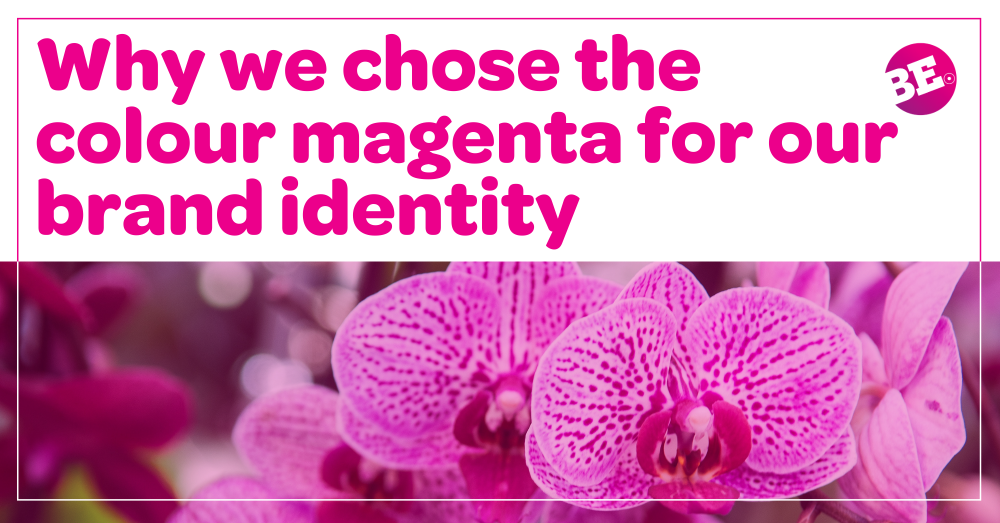
Why we chose the colour magenta for our brand identity

Join us as we embark on a captivating colourful journey through the enchanting universe of magenta, the mesmerising hue that has stolen the hearts of all of us here at Be Smart 

Magenta’s vibrant, bold, and awe-inspiring charisma is the very reason we chose it as the  core of our brand identity, eliciting admiration from both our clients and team members alike. 

 So, why did we fall head over heels for magenta? Join us as we embark on a chromatic rollercoaster of inspiration, wonder, and enlightenment. 

The magenta backstory 

To fully appreciate the captivating allure of magenta, let’s take a nostalgic journey. The name “magenta” made its debut in 1859, paying tribute to the Battle of Magenta in Italy. This audacious shade swiftly rose to prominence as a revolutionary aniline dye known as “fuchsine” which mesmerised the world. Over the years, magenta solidified its position in the colour palette, becoming timeless in the realms of fashion, art, and design. 

Magenta’s natural beauty 

Take a moment to appreciate the natural wonders that showcase the splendour of magenta. From the striking petals of fuchsias and orchids to the mesmerising feathers of flamingos and hummingbirds, magenta reigns as the undisputed queen of colours, captivating all who witness its brilliance. Here at Be Smart, we proudly embrace magenta as our signature shade. Its vibrant presence adds a pop on social media and branding efforts, while infusing our work with a touch of magic and undeniable joy. 

The magenta chakra connection 

But that’s not all! Magenta is more than just a visually appealing colour. It has a deep connection to the crown chakra, which is the seventh and final major chakra located at the top of the head. The crown chakra plays a vital role in guiding clear thinking, a sense of purpose, and a profound connection to the divine. Interestingly, the crown chakra is also associated with creativity, intuition, spirituality, and enlightenment – qualities that we strive to infuse into our boutique branding, design and digital agency. The affinity between magenta and the crown chakra is no coincidence; it adds an extra layer of significance to our work. 

The mystery of magenta 

Perhaps the most fascinating aspect of magenta is its very existence – or lack thereof. You see, magenta doesn’t genuinely exist on the visible colour spectrum. Instead, our brains invent this alluring hue to fill a void, essentially telling us that the colour we’re seeing “isn’t green.” A blend of red and violet, magenta defies the colour spectrum laws, which dictate that green should be the colour we perceive. Instead, our minds generate magenta, a captivating phantom that exists solely in our imagination. 

Magenta also holds a captivating duality. It straddles the line between warmth and coolness, effortlessly blending the fiery ardour of red with the serene composure of blue. This perfect balance makes magenta a versatile and adaptable colour, capable of conveying both playfulness and sophistication, depending on how it’s used. Its ability to evoke different emotions and moods allows magenta to be a flexible choice that suits various contexts and purposes. 

Why Be Smart chose magenta 

With its lively presence, spiritual meaning, and enigmatic origin, magenta personifies the playful, provocative, and confident essence of Be Smart. By adopting this fabulous colour, we’ve distinguished ourselves from the competition and embraced the risk-taking, assertive, and light-hearted spirit that characterises our small boutique branding and design agency. 

In a nutshell, magenta is the ideal colour to represent Be Smart. It’s bold, eye-catching, and deeply connected to creativity and intuition, while its mysterious nature adds a dash of humour and irreverence to our brand. Magenta encapsulates the soul of our agency, and we’re over the moon to share its magic with the world. 

So, the next time you spot magenta, remember that it’s more than just a colour; it’s a symbol of the infinite creativity, imagination, and inspiration within each of us. And who knows? Perhaps magenta’s unique charm will inspire you to take a leap, unleash your inner artist, and be smart, just like us. 

Are you ready to infuse your brand with colours and designs that will breathe life into your creative visions? 


Get in touch with our talented team at Be Smart today, and let’s embark on a journey to craft your brand identity! 

Why is brand consistency important and how can it give you a competitive advantage?

Consistency is a pretty big buzz word when it comes to marketing, right? We’re always being told to post consistently on socials, keep our messaging uniform, and make sure our branding is always on point. But why is brand consistency so important, and how can it give you a competitive advantage? 

Brand consistency is the key to earning customer trust and growing your business. Inconsistent branding, on the other hand, can hurt your brand’s reputation and is just plain confusing for potential customers! After all, how can they get to know and trust your brand if you don’t even know what your own brand looks and sounds like?  

What is brand consistency?  

Have you ever wondered why some brands just stick with you? Think about Coca-Cola, Apple, or Nike. What do they all have in common? It’s not just about their products; it’s about how they present themselves. This magic trick is called brand consistency, and it’s more powerful than you might think 

Consistency is all about being reliable. When people can count on you, they notice and remember you; in a business sense, this helps bring in new customers and keep the ones you already have. Staying consistent with your brand means using the same messaging, voice, and visuals in everything you put out into the world. This way, your audience always knows it’s you and thinks of you first when they need something you offer! 

Impact of inconsistent branding 

When building a brand, the last thing you want to do is confuse the market. Those people could be your perfect customers, but inconsistent branding can ruin your chances to generate leads or sales. So often when we buy something we are using emotions to do so and if you’re making your audience feel confused and distrustful, chances are they won’t want to buy from you! In other words, people buy from brands they connect with, and brands that feel authentic. It’s hard to connect with a brand that doesn’t have a consistent appearance. 

How to maintain consistent branding 

Okay, so now we know what brand consistency is and why it’s important, how the heck do you maintain brand consistency?  

How to achieve brand consistency 

Now that we’ve established why brand consistency is one of the most important things you can do for your brand, let’s talk about how to achieve it. It’s not as daunting as it might seem (we promise)! 

Define your brand

Start with the basics. What does your brand stand for? What is your core vision, mission, values, purpose and value proposition? Who is your ideal client? Defining these elements will create a foundation for your brand’s identity that you can then build your style guide around. And speaking of style guide…  

Create a brand style guide

This is your brand’s bible so to speak. It should include your logo, colour palette, typography, and tone of voice. The State Report found that even though 85% of organisations have brand guidelines, only 30% actually follow them consistently! Crazy figures, aren’t they? Without sticking to them, all the effort put into creating them goes to waste, and staff might not fully understand your brand’s vibe, making it hard to stay consistent.  

Be consistent across all platforms (duh)

Whether it’s your website, social media, packaging, or customer service, ensure that your brand’s identity stays the same no matter where you’re posting. If you’re all cheerful and chipper on Facebook only to be very serious with different colours used on your website, customers just aren’t going to know who you are. So, use the same colours, fonts, and tone of voice everywhere, and try to keep those visuals consistent too. 

Train your team

Your team is the face of your brand, so get them back in school (not literally) and train them to understand and embody your brand’s values and guidelines. This ensures that every interaction with customers is consistent and aligned with your brand and the service you want to deliver. 

Monitor and adjust

You probably thought you were done after you created a style guide, got posting consistently and trained your team? Sorry, but brand perception is an ongoing task! You’ll want to keep an eye on how your brand is being perceived, so use feedback and analytics to tweak and improve. Consistency doesn’t mean being static; it just means evolving while staying true to your core identity. 

How brand consistency sets you apart 

Now that you’ve got the hang of brand consistency, let’s talk about how it gives you that all important competitive edge. 

Standing out 

In a crowded market, being recognisable is half the battle. Consistent branding makes you stand out. It helps you catch the eye of potential customers and stay top-of-mind. 

Building loyalty

When customers know they can trust you to deliver the same quality and experience every time, they’ll keep coming back. This loyalty is priceless. It’s easier (and cheaper!) to retain existing customers than to acquire new ones. 

Premium pricing

Consistent branding often allows you to charge a premium. Why? Because people are willing to pay more for brands they trust and love. Think about luxury brands – their consistency in quality and image lets them command higher prices. 

Word of mouth 

Happy customers are your best marketers. When people love your brand, they talk (or yap as the cool kids say) about it. This organic word-of-mouth marketing is incredibly powerful and stems from a consistent and positive brand experience. 

Adaptability 

A strong, consistent brand can adapt to changes much more smoothly. Whether you’re launching a new product or entering a new market, your established brand identity will provide a solid base for you to build on – the skies the limit! 

Struggling with your brand’s identity and want to have a chat with us about it? Contact us today, we’d love to help! 

Pink is back! The Influence of Pink in Brand and Design

Well tickle us pink (yeah, we know), because today we’re talking about one of our favourite colours that’s taken the throne once again – pink! It’s bold, it’s vibrant, and it’s unapologetically back in the spotlight.  

So, let’s take a closer look at why this powerhouse hue is back in fashion and how it’s shaking up the design and branding world. 

The power and meaning of pink 

Pink has always been a colour loaded with meaning. Traditionally, it’s been associated with femininity, sweetness, and romance. However, modern interpretations have pushed these boundaries, giving pink a more exciting and versatile role. It’s a colour that can be both playful and sophisticated, soft and powerful.  

In branding, pink is used to convey a range of messages and emotions too. It can be warm and inviting or daring and rebellious. The key is in the shade and context! For example, soft pinks might suggest care and nurturing, ideal for wellness or beauty brands. On the other hand, bright, hot pinks scream energy and fun, perfect for products aimed at a younger, more typically adventurous audience. 

Barbie’s big influence 

Let’s talk about the elephant—or rather, the doll—in the room. Barbie. Yes, that Barbie. The Barbie movie (we love you, Margot Robbie!) has not only reintroduced us to this timeless toy but also reignited our love for all things pink. Barbie’s world is a pink paradise (when can we move in?), and this aesthetic has spilled over into the fashion and design realms in a big way. It seems that “think pink” is the new motto for brands. 

The film’s marketing was a masterclass in branding too. Every poster, product tie-in, and social media post was awash with vibrant shades of pink, creating an unmistakable and clear identity. This rebranding of Barbie has shown that pink is not just another colour; it’s a statement. It’s all about embracing a bold, unapologetic style and rejecting the notion that pink is “too girly” or “not serious”. 

Brands have picked up on this cultural shift too. Suddenly we’re seeing a lot more pink in the palettes. The impact is clear: pink is no longer seen as frivolous or niche. It’s powerful, versatile, and here to stay – and we are thrilled about it! 

Pink’s past prejudices 

Sadly, pink hasn’t always had it easy. For a long time, it was pigeonholed into a corner—deemed too feminine, too frivolous, or simply not professional enough. Fortunately, those days now appear to be a thing of the past. The rise of gender-neutral fashion and the breaking down of colour stereotypes have paved the way for pink to be appreciated for what it truly is: a versatile and exciting colour that can transform brands and captivate audiences. 

Take a moment to really think about it. Why shouldn’t pink be used in serious contexts? Why can’t it be the face of a powerful brand? The past few years have seen a cultural shift towards inclusivity and breaking norms. Pink is riding this wave, moving beyond its outdated prejudices and becoming a colour that represents strength, innovation, and inclusivity. 

Brands that nail their pink branding 

T-Mobile 

T-Mobile’s magenta is iconic. In an industry that has a whole lot of blue, black and grey, choosing such a standout colour was a smart move. This telecom giant has taken pink—a colour traditionally seen as soft—and made it synonymous with speed, reliability, and innovation. Their branding is a masterclass in consistency. From their stores to their promotional materials, the bold pink stands out, making them easily recognisable and reinforcing their brand identity.   

Victoria’s Secret 

When you think of pink in branding, Victoria’s Secret probably springs to mind. The brand has expertly used pink to define its identity, especially through its sub-brand PINK. Targeting a younger demographic, PINK uses a vibrant palette to create an image that’s both youthful and sophisticated. This clever use of colour has helped Victoria’s Secret remain a dominant force in the lingerie market, appealing to women of ages with a mix of fun and glamour. 

Glossier 

Glossier, the beauty brand that’s taken the world by storm, uses pink to communicate simplicity, elegance, and modernity. Their soft, millennial pink packaging is instantly recognisable and has become a symbol of their minimalist, user-friendly approach to beauty. Glossier’s branding proves that pink can be chic and sophisticated, appealing to a broad audience with its fresh and contemporary vibe. 

Pink in pop culture: Legally Blonde 2, Mean Girls, and the new Barbie 

Pink’s influence extends far beyond branding and into the realm of pop culture. Let’s rewind a bit and revisit some iconic moments where pink stole the show. 

Legally Blonde  

As if we could talk about pink in pop culture without mentioning Legally Blonde! Elle Woods, with her bubbly personality and pink outfits, taught us that pink can be powerful and professional. In “Legally Blonde” Elle’s pink wardrobe is more than a fashion statement; she redefines what it means to be a professional woman in pink, making it clear that competence and colour can go hand in hand. 

Mean Girls 

“On Wednesdays, we wear pink.” This line from “Mean Girls” became a cultural phenomenon, cementing pink as a symbol of popularity and power in high school hierarchies. The film used pink to represent both the exclusivity and the camaraderie of the Plastics, showing how colour can be a critical part of group identity and social dynamics. 

The New Barbie 

As mentioned earlier, the new Barbie movie has redefined pink for a new generation. The film’s visual feast of pink shades, from bubblegum to fuchsia, has captured the imaginations of audiences worldwide. It’s a reminder that pink can be playful, nostalgic, and forward-thinking all at once. The movie’s success has inspired brands to embrace pink in their marketing strategies, proving its enduring appeal and versatility. 

Final thoughts 

It’s pretty obvious at BeSmart that we love ourselves a bit of pink; our branding is magenta after all. Our use of magenta isn’t just about aesthetics though, we also use it to show what our brand is all about. This includes, uniqueness, creativity, friendliness, and even spirituality through magenta’s link to the crown chakra. This symbolises higher thinking, reflecting our approach to meaningful design. We always knew pink was powerful! 


Get in touch today to discuss your brand colours and how we can help you to create branding that really resonates with *your* audience!  

Proudly Authentic: Brands That Avoid Rainbow Hype And Show Genuine Pride

Pride Month is here, and with it we’re going to see a whole slew of rainbow branding and products. Now don’t get us wrong, we love to see the colours of the rainbow flying loud and proud! However, Pride month brings with it a whole lotta “rainbow washing”, with companies focusing on profits rather than authentic support.  

So, what is rainbow washing all about and how can you make sure your brand isn’t caught red (rainbow?) handed jumping on the LGBTQ+ bandwagon with ill thought-out campaigns? We reveal everything you need to know and even take a peek at some brands who have nailed authentic LGBTQ+ support!  

Okay, but seriously, what is rainbow washing? 

You know the story; It’s Pride Month, and every shop window you pass (in-person or whilst roaming the internet!) is adorned with rainbow-themed merchandise. Brands and companies are releasing limited-edition rainbow products, each claiming to be “supportive” of the LGBTQ+ community. On the surface, it seems like a glorious display of inclusivity and allyship. But beware! This phenomenon is what we call “rainbow washing”. 

Rainbow washing happens when companies and individuals use rainbow symbols and slogans to portray themselves as LGBTQ+ allies, yet their actions and policies tell a different story. At its core, it’s a performative display of support with a sneaky focus on using it for profits. This happens to a lot of awareness holidays, including Black Lives Matter, Black History Month, and Earth Day. 

So, how do I show support for the LGBTQ+ community the right way? 

Sure, rainbows are fantastic, but genuine support requires more than just whacking some colourful symbolism on your products and calling it a day. It’s lazy, unauthentic and can actually do harm to your company in the long run, particularly with Gen Z shoppers on the rise. This generation is more tech savvy and connected than any generation before it, and something they value above a TikTok dance, or a viral meme is honesty and unfiltered realness. 

You’ve told us the wrong way we hear you cry, so what the heck is the right way to show support? To get started on the path to true inclusivity, you need to think about the below: 

Educate yourself 

This one is really obvious, but it is often skipped. Before expressing support, take the time to educate yourself about the issues faced by the LGBTQ+ community. Learn about their history, the challenges they continue to face, and the progress they’ve made. Understanding their struggles and victories will give your support a more profound meaning and ensure you don’t wildly miss the mark with something that is instead pretty offensive… we’re looking at you, M&S sandwich 

Look beyond the rainbows 

Yep, the rainbows are great, but genuine support requires more than just colourful symbolism. Do you have inclusive policies for employees? Can you employ a member of the LGBTQ+ community to lead your campaign? Can you work with LGBTQ+ run companies or LGBTQ+ influencers? Will you be supporting or making donations to LGBTQ+ charities and organisations? Don’t try to blind your customers with rainbows, they will dig deeper, and your support will be seen as pure tokenism if its outed as having very little substance. 

Amplify LGBTQ+ voices 

We get it okay, not every business is in a position to make a donation. However, you can still amplify voices and show support within that community by sharing their stories. This leads us nicely into our next point! 

Be an ally all year round 

Coming as no surprise, one of the most telltale signs that a company is rainbow washing is that their support fizzles right out after Pride Month as they can no longer profit from it. To truly be authentic, make sure you’re showing support year-round. Stick by your values and be public with them. 

Be an ally all around the world or nowhere!  

When companies wave the rainbow flag in places where it’s ‘cool’, but don’t do the same in spots like Dubai and the UAE, where being gay is less accepted or even illegal, it’s kind of like they’re rainbow washing. It’s like they’re picking and choosing where to show their support for LGBTQ+ rights, which might make you wonder if they’re just trying to look good and make more money in certain markets, instead of really standing up for the community everywhere. 

Which brands have shown genuine pride? 

We’ve given you some examples of support, but to help bring these ideas to life, let’s have a quick look into which brands have supported Pride Month in the right way and why these campaigns were so flipping awesome! 

Skittles 

We’re going to give you another reason to love this tasty sweet! In 2017, Skittles, launched a distinctive campaign titled ‘Give the Rainbow’ to show support during Pride Month. Scrubbing clean their packaging, they released limited edition white packets with the tagline “During Pride, only one rainbow matters”. 

Why it works: Not only did the white packaging help them stand out in a sea of rainbow slathered products, the black and white packs made a powerful statement about the essence of Pride Month – celebrating the LGBTQ+ community’s struggle for equality. They also made it clear that the profits from each limited-edition pack would be donated to UK-based LGBTQ+ charities. This transparency in their charitable contributions added to the campaign’s sincerity and led to the campaign now being run yearly. 

Converse 

Converse aren’t just about the sweet kicks, they’ve also got some pretty cool campaigns! For their 6th annual Pride campaign, Converse collaborated with five young LGBTQ+ creatives and over 50 LGBTQIA+ Converse teammates and allies to create a dazzling Pride collection. 

Why it works: By collaborating with LGBTQ+ individuals, Converse ensured that the campaign’s essence was rooted in real experiences and perspectives. Beyond these colourful designs and slogans, Converse backs its campaigns with tangible actions. Over the past six years, the company has donated a staggering $1.3 million to LGBTQ+ organisations, including the It Gets Better Project, the Ali Forney Center, BAGLY, and OUT MetroWest. They don’t just talk the talk; they lace up their Converse and walk the walk! 

Ben & Jerrys 

Now here’s an ice cream brand that is really worth screaming for! B&J are all about those clever puns, often renaming their popular flavours to support key LGBTQ events. For example, to show support for Vermont legalising gay marriage, they renamed the popular “Chubby Hubby” flavour to “Hubby Hubby”. Similarly, they joined hands with Marriage Equality in Ireland, renaming their Mint Chocolate Chunk flavour to “EngageMint Party”. 

Why it works: Ben and Jerry’s have one of (it not the best!) track record of supporting LGBTQ+ rights. They’ve continuously shown unwavering support, signing the USA Amicus Brief in 2015, partnering with and participating in Pride events, donating to charities, and more. This very visible support shows that their renames and rebranding aren’t just meaningless gestures designed to make profits a bit sweeter. 


Could your branding and campaigns use a little work? Contact us today to see how we can help! 

Cracking the Comms Code: Let’s Conquer The Annual Report Labyrinth

annual report

It’s time to venture into the labyrinth that is the annual report – those enigmatic puzzles of paperwork that both challenge and intrigue us! We get it, the struggle is real, from deciphering the data to dealing with cryptic feedback from Sue in finance who seems to speak in riddles – no offence, Sue.

At Be Smart Design, we’ve got the map and the compass to guide you through this maze of paperwork with style and flair!

Balancing Info and Fun

Alright, let’s be real here—annual reports can be be as intricate as a maze, with twists and turns, surrounded by walls of information that leave us feeling lost. But who says informative can’t also be fun? We’ll help you map out your reports whilst taking you through the scenic route – keeping your report fresh and engaging without losing the important stuff.

Running from the boulder of deadlines

Ah, the crushing weight of deadlines—they seem to come hurling at you out of no where! With our lightning-fast workflow and a dash of creative caffeine, we’ll leave those deadlines in the dust without breaking a sweat.

Illuminate the way with your brand

Your brand deserves to shine, so why settle for anything less than stellar? We’ll sprinkle some pizzazz into your reports to keep that brand essence bright for everyone to see, ensuring your report beams “YOU” from start to finish.

Breaking down barriers

Everyone should have a chance to join the discussion, right? That’s why we’re all about making your reports accessible to everyone. Whether it’s adding some forward-thinking features or just keeping things simple and easy to read, we’ve got you covered.

Handling Stakeholder Expectations Like a Pro

Stakeholders can sometimes present challenges, but we’ve got your back. We’ll help with navigating their expectations and ensuring everyone walks away satisfied.

Keeping Compliance Cool

Regulations, rules—whatever you want to call them, they can be a headache! With our keen eye for detail and knack for staying on the straight and narrow, you can trust us to keep your reports compliant, legit, and ready to impress even the toughest critic!

So, there you have it, folks—annual reports, decoded by Be Smart Design! With us at your side, annual reports will become not just a task, but a thrilling adventure full of fun, flair, and boundless creativity! 

Get in touch to let us help you achieve annual report success!